08 - Of Light and Darkness
[00:00:00:00 - 00:00:04:05]
Welcome to this continuation of the Gospel of St. John. We're now in lecture 8.
[00:00:05:09 - 00:00:15:23]
You may have noticed by now, I've been saying 15, it's actually really 14 lectures total. So we're already halfway through. And tonight we're going to tackle two chapters.
[00:00:16:25 - 00:01:12:06]
I did send a reminder for you guys to actually read those chapters. I hope you did, because I not going to have time to go through them verse by verse. So I'll summarize as much as I can. But I do encourage you to subscribe to the newsletter. You can do that at Corbono. Q-R-B-O. I know you'll see that name written all over the slides. And just put your email and name and then you will get those notifications. And then inside the newsletter, I have a link to the actual text for you to read. Very well. So we are going to hit chapter 7 and 8 tonight. Well, yeah, I should have fixed that. That's actually chapter 7 and 8, not 6. And here we are. So it's the Tabernacles and Light. And it's a really important passage in this Gospel.
[00:01:14:28 - 00:01:38:22]
What we've seen so far is that St. John very deliberately showed us that the Logos, the Word of God has come down to reclaim the world he created. And he's doing it systematically. He did it geographically, liturgically, financially, catacatically, already gone through all of this missionally and judicially. And then last time when we
[00:01:39:25 - 00:01:48:11]
went through the Bread of Life discourse, he's doing covenantally. His Eucharistic revelation becomes a line of division.
[00:01:48:11 - 00:02:51:04]
So covenantally, like I said, he's coming in and he brings the division with him. And he's unapologetic about it. And that should give us all food for thought. And then the last bit is dealing with the devil. For the first time, the devil is mentioned at the end of the chapter. We didn't cover that last time, but it's in my notes because he tells us as apostles, then I chose all of you, yet one of them is a devil. So now the devil enters the picture. The final enemy is now in the picture. And that's going to be important. So today, it looks pretty simple. We're going through an interaction and then we're going to talk about Sukkot, which is a feast of tabernacle, the true exodus, where the true exodus is going to begin and then we'll deal with the conclusion. It's really interesting and you'll see this, and I'll start to preface this right now. St. John places the Eucharistic crisis
[00:02:52:04 - 00:03:01:26]
on a demonic foundation. He's instituting the Eucharist atop a world owned by the devil.
[00:03:04:05 - 00:03:13:14]
And then it's sandwiched between two attempts at killing him in chapter five and in this chapter.
[00:03:13:14 - 00:03:44:10]
So he's essentially sandwiching this Eucharist between two murders and tensions and over demonic background. Think about it. Think about what Jesus was dealing with and think about the world we live in. Business as usual. All right. So I'm hoping that if you've been tempted by this whole apocalyptic thing, right, the end of the world, you kind of maybe start to relax a little bit.
[00:03:46:01 - 00:03:57:13]
There isn't any particular science right now that tell us, "Oh, the end of the world is nigh." I can't see that. It's just business as usual.
[00:03:57:13 - 00:03:59:17]
he is now going to carry that crisis into the tabernacle,
[00:04:01:28 - 00:04:14:23]
into the tabernacle where he's going to confront Israel at the feast that remembers God's dwelling, celebrates his provision and anticipates his final kingship. Sukkot, the feast of tabernacle, which is what these two chapters are about, is very important feast.
[00:04:17:22 - 00:06:32:17]
What we need to understand is that at this feast, St. John is not changing the topic. He is basically continuing. He just changed the stage and he's doing it deliberately. He's going to move from the synagogue crisis around bread to the temple feast where Israel's whole symbolic world is gathered in one place. Chapter seven and eight presents us with a handful of feast-charged elements, water, light, public teaching, judgment, climatic day of the feast to summon the entire covenant world of tabernacles without re-explaining it. It's a very important feast and I'm going to bring some of that element to you as we go through it. St. John writes, "Knowing the feast itself is already a loaded symbol field." Now keep in mind when he wrote, writing wasn't cheap. So he needed to keep this text that he was writing as short as possible because you have to copy this, you have to disseminate it and it's none of that is cheap. So he's really counting on his readers to know the context and particularly tabernacle, they should know what that feast is all about. He is now using tabernacle as sort of the summary or to sum up the whole covenant because so much is going on in that feast and he doesn't merely borrow one symbol from it, he pulls the whole thing into it and not just him but our Lord himself. There is the deliberate action going on here. When Jesus is going, go back to the temple at the feast, he's basically saying this, "I am the source of the water you are seeking in this feast. I am the light you are looking for in this feast. I am the true locus of God's dwelling. I am the teacher before whom the law must now be heard rightly. I'm the dividing line of the covenant. I'm the one before whom Israel and ultimately the nation will stand." That's why the scene feels so electric and so charged. Now, one thing you need to keep in mind, book of chapter 6, we're talking about the Eucharist,
[00:06:34:17 - 00:06:40:06]
right around the Feast of Passover. Now we're moving to tabernacle, six months gap.
[00:06:43:08 - 00:07:01:08]
So you can see he is not interested in relating everything the Lord did. He's writing a catechism. His goal is to convince you of who Jesus is, what he came to do. So you may believe as he says at the end of the book and he's choosing these scenes deliberately.
[00:07:01:08 - 00:07:17:27]
Now, during the discourse on the bread of life, the murderous intent faded. The one that we found we saw in chapter 5, what I thought about killing him, faded away during that chapter. Now it's coming back.
[00:07:17:27 - 00:07:34:13]
world already split by Eucharistic revelation is now dragged into the temple because the discourse on the Eucharist happened up in Galilee. Now the whole the whole crisis enters the temple.
[00:07:34:13 - 00:07:39:18]
So as usual, if you want to use the system,
[00:07:39:18 - 00:07:44:13]
you can grab this QR code to ask questions. I'll give you a minute to do so.
[00:07:44:13 - 00:08:00:27]
And what I would like you to keep in mind today, because it's two chapters and we'll try to see how much we can cover out of this, is this idea, this fundamental idea that Jesus goes up to the temple, dragging with him this crisis, and he does not shy away from it.
[00:08:00:27 - 00:08:07:13]
goes, it is truly countercultural, especially in our times.
[00:08:09:07 - 00:08:14:01]
And we'll talk about that. Why is he doing that? Why is he being so adversarial?
[00:08:14:01 - 00:08:56:23]
So as usual, please stand. Let's begin with the word of prayer in the name of the Father of the Son of the Holy Spirit. Amen. Come Holy Spirit, fill the hearts of your faithful and kindle in them the fire of your love. Send forth your spirit and they shall be created and you shall renew the face of the earth. O God, who by the light of the Holy Spirit did instruct the hearts of the faithful, grant that by the same Holy Spirit we may be truly wise and ever enjoy his consolations through Christ our Lord. Amen. Mary, see the wisdom, Saint John, Saint Joseph, all the angels and saints.
[00:08:57:29 - 00:08:59:29]
Name of the Father of the Son of the Holy Spirit. Amen.
[00:08:59:29 - 00:09:12:15]
So at Sukkot, which is the Feast of Tabernacles, the true exodus begins. And we're going to be talking more about this exodus. Let's go through this overview of these two chapters.
[00:09:12:15 - 00:09:34:08]
Feast of Booths, the Feast of Tabernacles is a feast in which the Jews remember redeemed people not yet home. It is the event that took place after Israel left Egypt. They dwelled in tents. It is that event that is being remembered by the feast.
[00:09:39:07 - 00:10:01:18]
However, all that is left of the feast is the husk, as you will see. And so Jesus enters this festival, enters this feast where people are celebrating and they go to the motion. But it's the void of meaning. It's the void of sense.
[00:10:04:27 - 00:10:39:17]
The very first symbol of the feast is water, because in the wilderness, God provided water for them and God allowed them to cross safely through the water. And he's going to offer living water. Again, the same theme that he offered up in Samaria is going to offer here. The reaction is going to be completely different. And then we hit this one passage which I know most of you have heard a bunch of times. The woman caught in adultery and they bring her to Jesus.
[00:10:41:13 - 00:12:10:10]
And then he has this famous saying, "Let the one who has not sinned cast the first stone." And then he's writing something on the ground. And whatever he's writing has caused a lot of ink to be spilled. What is he writing? We're going to deal with this. Then we switch from water to light, because he declares himself the light of the world. And there's a decision to be made for true discipleship. And finally, the great I AM is going to lead his people into the true Exodus. Seven parts, these two chapters break nicely into seven parts, which look like a menorah. Now, I don't want you to think, I'm not trying to push the image of the menorah into the text saying, this is what St. John had in mind. I just want to use it as a good mnemonic to remember. The menorah, the seven branched candelabra was in the temple. It was six feet tall, the height of Christ. And it was lit from the middle branch. The light that they used to light the menorah came from the tabernacle in the desert, lit by the Holy Spirit. So it is a representation of Christ. By the way, in the Latin right churches, you have the remnant and the menorah in the Paschal candle. That's what that candle is. It comes straight up from the temple and it is the menorah, but it's now
[00:12:11:17 - 00:12:14:24]
the only basically the main branch remains. All the other ones are gone.
[00:12:16:16 - 00:12:38:12]
So it's structured in seven passage and the heart of it is this business of the woman caught in adultery. Now, many commentators will tell you that this passage would seem have nothing to do with the rest is sort of inserted there. But the truth of the matter is the hinge
[00:12:40:06 - 00:12:44:15]
upon which everything holds. I'll show you that.
[00:12:45:19 - 00:13:00:24]
So Booth, Sukkot remembers Israel after redemption, but before the rest, delivered from Egypt, living in a provisional shelter, sustained by God, but not yet home. It is therefore a feast of pilgrimage,
[00:13:03:07 - 00:13:32:15]
incompletion and hope that makes it the ideal covenant setting for Jesus who comes not merely to improve the old pilgrimage, but to bring it to fulfillment. Jesus is at pains to explain to them as he did in the in the in the this was on the Eucharist that you need to leave the old covenant. You need to leave the covenant of Noah and Adam in order for you to join the new covenant of the son of man. That's an exodus. You're leaving one to enter the other.
[00:13:34:26 - 00:13:37:24]
The feast of Booth is all about an exodus out of Egypt.
[00:13:41:07 - 00:13:49:27]
Guess what is the new Egypt? Something that the prophet used as an expression. There's a city that they called New Egypt, Jerusalem,
[00:13:52:29 - 00:14:00:05]
and he's coming to the New Egypt to lead them out of it into the true promised land, the church.
[00:14:02:03 - 00:14:03:26]
And that's not going to go very well,
[00:14:06:05 - 00:14:30:23]
because he's facing unbelief. Before Jesus ever cries out about water or light, Saint John shows us that the covenant world he enters is already under strain. His brethren do not believe. The rulers want him dead. The crowd murmurs. Fear govern public speech. The old order is still standing, but it has been hollowed out from within by unbelief, accusation, pride, and the devil's deeper work.
[00:14:30:23 - 00:14:38:25]
Then he is going to talk about water. Midway through the feast, he says, I will give you living water.
[00:14:38:25 - 00:15:00:18]
So he's going to cry out that whoever thirsts should come to him and drink. Here he reveals himself as the source of the life Israel truly needs, but the offer of water is not neutral. It reveals thirst, exposes resistance, and begins to divide the people. You're not going to drink water unless you're thirsty.
[00:15:00:18 - 00:15:05:20]
call out is received by a very stern resistance.
[00:15:07:00 - 00:15:13:08]
And you'll see people are clinging to the old covenant. They're clinging to the natural order. They look at him and say, isn't he the son of Joseph?
[00:15:13:08 - 00:15:26:09]
And it's something that we are often tempted to do. Not exactly in the same way, but when confronted with situations that we consider unpleasant, things are not going our way.
[00:15:26:09 - 00:15:28:14]
we are tempted to do the same thing.
[00:15:28:14 - 00:16:26:27]
Then we have the woman, the bride. The woman caught in adultery is not an interruption, but the hinge of the whole section. The reason is there is profound irony going on here in this particular passage when they bring this woman caught in adultery to him. Because truthfully, this woman is a mirror of Israel. In the prophetic language, adultery is always connected with idolatry. When Israel moves away from God, the language used is marital, where God says through the prophets, you are basically gone after other men, meaning the gods. So adultery and idolatry are always connected. And here is Israel who is refusing her Lord, bringing a woman caught in adultery.
[00:16:28:12 - 00:16:48:22]
So the judgment that Christ is going to cast on this woman isn't just being cast on this woman, but also cast on those who bring her to him. That's why it's the hinge. That's why it is the key passage. And as usual, Saint John uses irony masterfully well.
[00:16:50:20 - 00:17:20:21]
And immediately after this, he declares himself the light of the world. Why? The sequence matters because his light exposes hidden guilt. It is his light that exposes hidden guilt among all these men who are ready to stone her. It is also his light that shines on her face. And so what is the light of Christ? It's his mercy.
[00:17:20:21 - 00:17:53:20]
the light of Christ reveals the father and opens a path for the sinner. It's not sentimental. It illuminates the humble and blinds the proud light and water have duality. Water can save you and give you life. Water can drown you. Light can provide a pathway forward or it can blind you. Blessings and curses. It's covenantal. And then there's a decision.
[00:17:56:24 - 00:18:46:05]
It's a decision for the disciples and the brethren, those listening to him to make. And you will see the language is very harsh. And finally, the whole passage culminates with the Exodus. The whole movement culminates and the new Exodus logic. Sukkot remembers the people in booths not yet home. Jesus enters the feast and reveals that he himself is now the way forward. I am the way. That is not poetry. That is Exodus. We saw it last time as soon as Jesus walked on water and joined them in the boat that were in the land. There's no transition. Why? He's the way. You're with him. You're there.
[00:18:46:05 - 00:18:55:07]
immediate transition tells you as soon as Jesus was with them, they were on land. They got to where they were supposed to go. Why? Because he's with them.
[00:18:57:18 - 00:19:05:15]
So for each one of us, as long as you're with Christ, you're home. The rest doesn't matter much.
[00:19:09:12 - 00:19:11:07]
If you're with Christ, you're home.
[00:19:15:27 - 00:19:38:01]
That's what he's at pains to tell them. That's what he's at pains to tell us. And just as we fret and worry and we're anxious and we have concerns and questions, and we seem to spend more of our time thinking about everything that is going wrong, in spite of spending it with the one who makes everything right,
[00:19:39:07 - 00:19:49:19]
instead of focusing on the relationship with we focus on the problems, they did the same thing. They did the same thing, which is why it is good to meditate on these texts because they reflect us.
[00:19:50:20 - 00:19:53:20]
We are like them in many ways.
[00:19:53:20 - 00:20:20:18]
I have here 10 slides that cover this topic, and we are halfway through. There's no way I can cover them. I'm representing the numbers in ways to show you what I'm going to be covering mostly. I'm gonna spend my time in slide two, slide seven, and the blue ones are where I'm going to spend a little bit more time, and then the white ones, I'm going to skip very quickly. But if
[00:20:20:18 - 00:21:16:01]
you're not hearing me talk, or maybe that's even better than you're not hearing me talk. So this is working. Let's begin with slide one, which is the unbelief of Jesus's brethren. And you can see here, I have a series of topics numbered from one to six. If you notice on the slide, I have these numbers which are darker than the ones that indicate the verses. These match those, and if you go look at my notes, they will match as well. This is how you can actually track and follow what is on every one of those slides. So I suggest you do that. I'm not going to spend a lot of time on this because we don't really have much time, but I will tell you is the word brethren. The word brethren is not disciples, and it's not apostles.
[00:21:17:11 - 00:21:24:09]
It literally means people who are part of his extended family. So people who know him naturally.
[00:21:26:08 - 00:22:05:22]
And these are the people who do not believe in him. I started by reminding you that in the end of chapter six, Jesus said, "Did I not choose you the 12 and one of you is a devil?" He was speaking of Judah as the son of Simonus Carriot. And right after the mention of the devil, we have the Jews who are trying to kill him. There's no coincidence there. The proximity tells you at the end of the day, the devil is obviously behind everything. It doesn't take away human responsibility, but he's the one who whispers. He's the one who continuously tries to pull us apart.
[00:22:08:17 - 00:22:21:26]
And then his brethren said to him, "Leave here and go to Judea that your disciples may see the works you're doing." But fundamentally, they did not believe in him. They want showmanship.
[00:22:24:18 - 00:22:29:11]
And so Jesus tell them, "My time has not yet come, but your time is always here.
[00:22:30:16 - 00:23:14:28]
The world cannot hate you, but it hates me because I testify of it that its works are evil." Watch how undiplomatic Jesus is. There's no diplomacy. There's no tact in these words. It doesn't try to be nice and kind and gentle. He says it as it is. I'm pointing this out because sometimes you may feel if you are facing someone in a situation that you don't have the right words. That might stop you from testifying. And I'll encourage you not to let that stop you. Do not worry about your words. You don't know how they're going to land.
[00:23:16:06 - 00:23:23:27]
Just say what's on your heart. Let the Holy Spirit take care of the rest. It's far important for you to witness than to try and be polite.
[00:23:25:00 - 00:23:29:26]
I mean, if you can do both, absolutely. But if you have to choose, witness.
[00:23:29:26 - 00:23:43:23]
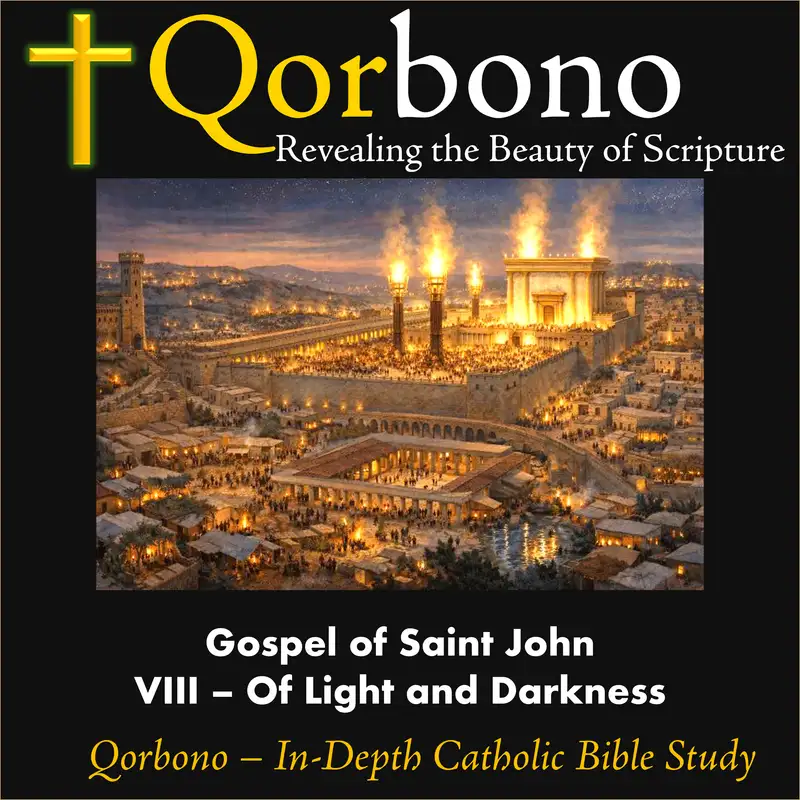
So what is Sukkot? What is this feast? This is what Jerusalem would have looked like doing this feast. They would have stood up these massive towers with light that would illuminate the entire city throughout the whole night.
[00:23:48:27 - 00:23:55:20]
Because while they were in a desert wandering, God provided light for them, right?
[00:23:58:19 - 00:24:25:14]
This feast is to be celebrated on the seventh month of the year. On the seventh day of the seven month. On the seventh day of the seven month to last 14 days and ends on the 15th. Seven, seven, seven, seven.
[00:24:27:24 - 00:24:31:23]
If anybody is not paying attention to the covenant, I don't know what it will take.
[00:24:33:08 - 00:24:43:04]
The seven is the number of the covenant. Like I told you before, on the seventh day, God rested. And if you make a covenant in Hebrew, you seven one yourself. That's the expression.
[00:24:44:21 - 00:24:51:00]
Seven, seven, seven is the totality of it. It is the covenant. This is the feast of the covenant par excellence.
[00:24:54:09 - 00:25:00:14]
It is people living in tents. You can see in this illustration, these tents here are provisional.
[00:25:01:14 - 00:25:13:13]
So people who even live in Jerusalem would leave their homes and go live in a tent for this period to celebrate the mercy of God and his guidance. So it's a festival.
[00:25:16:08 - 00:25:20:19]
If you wonder why we have festivals and churches, well, wonder no more. That's why.
[00:25:20:19 - 00:25:23:15]
It's the memory of the wilderness.
[00:25:25:27 - 00:26:17:09]
Yeah, one thing I wanted to point out, like I said, it's seven days. I'm sorry, I said 14. It's not. It's seven. It's seven, seven, seven days. And then it closes on the eighth, the new day. I mean, it is filled with the symbolism that Saint Paul will use later, talking about the eighth day, Sunday. So it closes on Sunday. And the rhythm is theologically rich, fullness, completion, a holy consummation beyond completion. Even if we do not lean to heavily on symbolic arithmetic, the feast's shape already suggests movement from provision into fulfillment. The whole purpose of the feast is to remind them that they live provisionally here and they're awaiting the fulfillment of the promises of God. And he comes and stands in the midst of them and tell them the fulfillment is here and they reject him.
[00:26:17:09 - 00:26:36:29]
is the feast of booths and the feast of ingathering. It joins two realities, the historical memory of wilderness dwelling and the agricultural joy of gathered abundance. It happens after harvest. It remembers fragility. Why celebrating provision?
[00:26:36:29 - 00:27:00:06]
a pilgrimage feast. This is one of the three great feasts at which Israel's males are to appear before the Lord. That means the feast gathers the covenant people in concentrated form. When Jesus enters Jerusalem at Sukkot, he is not meaning a private devotional circle, but Israel assembled in one of her great circuit moments.
[00:27:00:06 - 00:27:12:01]
there's another really important aspect of Sukkot. During Sukkot, God commanded them that the covenant that he established with Moses be read.
[00:27:13:13 - 00:27:30:16]
So they are reminded of it. That's what they're supposed to do. So this covenantal centric. It is the reminder of the covenant that they had established with Moses. And Jesus is already
[00:27:33:06 - 00:27:36:18]
in conflict with that because of the discourse on the bread of life.
[00:27:38:09 - 00:27:53:01]
Moses gave you manna, but if you ate it, you died. The bread I'm about to give you, if you eat it, you will not die. So he is here to give the full meaning to this feast.
[00:27:55:19 - 00:27:59:16]
And then he's going to promise living water like we said already.
[00:28:01:28 - 00:28:12:28]
Because during the prophetic age, you have to understand the hopes of divine water, refreshment, abundance is part of the language of the prophets about the feast.
[00:28:12:28 - 00:28:28:20]
And the feast bears obviously strong association with light, joy, illumination, divine presence. This prepares the ground for Jesus declaration. I'm the light of the world. At Sukkot, that is not a pious slogan, an act of theological seizure is basically saying all these lights around.
[00:28:30:07 - 00:28:40:26]
Again, the vote of meaning. I am the one who's the fulfillment of all everything you're seeing here. Like he's done before, he's taking it over.
[00:28:44:21 - 00:29:04:21]
And there is another important element. Zachariah connects the feast of booth with the nations coming up to worship the Lord. Zachariah, the prophet Zachariah has a prophecy that says at the feast of booth, people will come up to the temple and join Israel in worshiping the Lord.
[00:29:07:16 - 00:29:20:04]
So there is a universal horizon one more time where it's no longer about Israel, but about the world. And that is going to matter greatly in St. John because what happens here
[00:29:21:09 - 00:30:14:20]
is already larger than Israel alone. But more importantly, there is a peculiar event that happens and you may still remember it from Holy Week. I don't know if in the Latin right you have that reading, but it's a reading where Greeks come to Philip and saying, we want to speak with the Lord. And Philip goes to Andrew and Andrew and Philip goes to go to Jesus and tell him there are some Greek dudes who want to talk to you. And then Jesus' reaction is again mystifying. He doesn't say, you know,
[00:30:15:25 - 00:30:23:05]
sure bring Jeroz and Tetsiki here, let's have a conversation. He says, at last my hour has come.
[00:30:23:05 - 00:30:25:10]
Well, that's why.
[00:30:25:10 - 00:30:31:16]
When the nation comes to Jesus, the hour has come.
[00:30:34:11 - 00:30:42:00]
And Sukkot is already prophesying that. So it is in this context that the confrontation is going to take place.
[00:30:42:00 - 00:31:05:29]
why the confrontation? I mean, it's a really harsh one. Why didn't Jesus just stay in Galilee, mind his own business, go about, convert, visit villages and make more disciples? Why go to the heart of the enemy's camp?
[00:31:05:29 - 00:31:14:26]
Because this is his father's house. Because his father's house right now is a travesty.
[00:31:16:01 - 00:31:42:22]
Because his father's house is filled with people who go through the motion without understanding what the motion means and who they are seeking. Because the people are lost, because the people will not get to heaven without him, because he loves them and he cares about them, that he's willing to risk his own life, go and save them. That's what he did back then.
[00:31:44:04 - 00:32:04:01]
That's what he does now. Because we are the temple of the Holy Spirit, Saint Paul tells us. And in many ways, and I know this that conjures these maybe beautiful images of the sort of glorious, shiny temple. Yeah, I think we're more like this.
[00:32:07:15 - 00:32:55:11]
There's this whole mess inside of us. And many of us would think that because of all this mess inside of us, it's kind of dirty and messy and smelly and a lot of gremlins running around in our souls. Jesus should not come. We have to clean up the place first and maybe then he comes. But that's not how he does it. He shows up like a thief over there. He shows up like a thief in your own soul. He doesn't wait for us to give him permission. He redeemed us by his own blood at baptism. He purchased us. We are his property. He doesn't need permission and doesn't ask for it.
[00:32:57:08 - 00:33:19:19]
So that's why he basically comes. He is there for fulfillment, not just to intrude. The signs cannot outlive the reality. The signs that Sukkot represents, it's just a sign. It's a sign like saying, you know, San Diego, 30 miles, just a sign.
[00:33:19:19 - 00:33:37:13]
can't spend your entire life looking at a sign. You better go. Well, San Diego came to you. The Lord came. Reality came. If he were to remain silent, he would abandon Israel. He's not willing to do that. That's why the confrontation.
[00:33:39:01 - 00:33:42:25]
And so love confronts before it judges.
[00:33:47:08 - 00:33:48:20]
That's why he basically goes.
[00:33:48:20 - 00:33:55:24]
he waits for the middle of the feast before he speaks.
[00:33:57:00 - 00:34:07:15]
So three days he's there saying nothing. And he went for the middle of the feast. Why? Because he's waiting for the moment where you have the greatest number of people. The greatest number of people.
[00:34:07:15 - 00:34:16:02]
Because, you know, the Middle Easterns, we take time to show up.
[00:34:19:18 - 00:34:23:26]
Half the people at St. Ephraim show up late for Mass.
[00:34:26:07 - 00:34:34:00]
We take time. We're not going to show up right there and then. So he waits. I just want you to think about this.
[00:34:35:05 - 00:34:42:08]
I just want you to imagine Jesus in your soul waiting.
[00:34:46:18 - 00:34:47:21]
Just waiting.
[00:34:50:07 - 00:34:58:17]
You don't know he's there. You don't feel his presence. You don't feel his love. You don't sense him. But he's there waiting.
[00:35:01:04 - 00:35:02:17]
And he's not waiting for you.
[00:35:02:17 - 00:35:09:14]
Now, he's there and he is teaching.
[00:35:11:19 - 00:35:14:07]
Then they marveled. What are they marveling about?
[00:35:16:05 - 00:35:19:02]
How is it that this man has learning when he has never studied?
[00:35:23:06 - 00:35:26:26]
That's what they're marveling about. You can see the natural inclination.
[00:35:28:18 - 00:35:39:26]
They can't sense the supernatural reality of his presence. Yet he multiplied bread. He walked on water. And they can't sense it.
[00:35:39:26 - 00:35:45:03]
And then you can see how it quickly, quickly.
[00:35:46:12 - 00:35:52:26]
Escalates. Did not Moses give you the law? Yet none of you keep the law.
[00:35:54:08 - 00:35:59:02]
Why is it that none of them keep the law? Is it because they're just a bunch of bad people?
[00:36:00:06 - 00:36:22:23]
No, it's worse than that. The law, the Ten Commandments. Is impossible to keep without grace. You can't keep the Ten Commandments without you cannot. Don't take it from me. Take it from God. Because that's what he told Ezekiel.
[00:36:24:28 - 00:36:27:00]
I gave them a law by which they could not live.
[00:36:31:02 - 00:36:52:07]
Why did he give them a law by which they could not live? Because as St. Augustine says, the law was given so grace we may seek. And grace is given so the law we may keep. So the whole idea is that he gives them a law so that he can seek him. The end of the game isn't the law. It is the giver of the law.
[00:36:53:08 - 00:37:10:16]
So you get the law and you go, there's no way I can do this. Then you turn to God and say, I cannot do this. And God says, I know without me you can't, but with me you can't. I'll venture to tell you also that in many ways marriage is exactly the same thing.
[00:37:14:00 - 00:37:26:09]
He created this institution that is impossible to live up to. Why? So we may seek him.
[00:37:28:28 - 00:37:34:00]
So that we can actually live it up with him, not without him.
[00:37:36:03 - 00:37:59:26]
It's his pedagogy. It's his way of teaching us about him so he can bring us to him. That's why he says that. None of you can keep the law. And what he does with this is he exposes a false judgment. If you cannot keep the law, you're basically hypocrites.
[00:38:01:01 - 00:38:32:21]
And if you're hypocrites, you should at least look into your heart before you accuse me, because your judgment is not true. And he tells them in the end, judge with right judgment. So watch what happens. Sukkot is supposed to be a feast where Israel realizes all that God gave them and is grateful for it and recognizes the dependency on God. God shows up in their midst and they start asking questions of pedigree. What's the degree?
[00:38:35:26 - 00:38:55:03]
And the hypocrisy is staggering. And so Jesus very gently here still, I mean, he's direct, but he's still gentle. Tell them you need to recognize you're not judging with right judgment. You see, okay, right there.
[00:38:58:23 - 00:39:13:26]
I did one deed and you all marvel at it. It's when he healed the paralytic on the Sabbath. See, the fact that it's on the South is really key. And we'll see that in the short while. This is what he's referring to. I did one deed and you all marvel at it. Moses gave you circumcision
[00:39:15:23 - 00:39:19:06]
and you circumcised the man upon the Sabbath. You do work on the Sabbath.
[00:39:23:13 - 00:39:32:23]
If on the Sabbath, the man receives circumcision so that Allah Moses may not be broken. Are you angry with me because on the Sabbath, I made a man's whole body well?
[00:39:32:23 - 00:39:40:17]
They're attached to the law for getting its purpose.
[00:39:40:17 - 00:39:45:23]
And then so what is their reaction? Well,
[00:39:45:23 - 00:39:49:24]
not this man whom they seek to kill.
[00:39:52:11 - 00:39:57:12]
We know where this man comes from. When the Christ appears, no one will know where he comes from.
[00:39:58:13 - 00:40:05:09]
Again, the natural tendency wins over one more time. Skepticism at its worst.
[00:40:05:09 - 00:40:23:25]
you can see where does this man intend to go? Because he tells them you will seek me and you will not find me. Where I am, you cannot come. Where does this man intend to go? That we shall not find him. Does he intend to go to the dispersion among the Greeks and teach the Greeks?
[00:40:23:25 - 00:40:55:20]
Oftentimes, we struggle. We struggle the same way. God is saying something and we're hearing something else. Yeah. It's hard. You may be facing some pain or crisis or difficult situation with some loved ones and the situation seems completely blocked. Nothing is moving. You pray and pray and pray and pray and nothing. God doesn't seem to be even answering you, not even listening to you.
[00:40:56:21 - 00:41:03:24]
And you start thinking, well, maybe I'm not good enough. Maybe God doesn't love me. Maybe you go through the years, start spinning.
[00:41:06:16 - 00:41:15:25]
I'll tell you right away, it's normal. It's just a struggle of faith. So don't judge yourself too harshly if you go into something like this.
[00:41:16:27 - 00:41:27:21]
You're struggling through faith. That is the normal thing to do. Just start to reorient it a little bit based on what St. John is telling us by looking at who really Christ is.
[00:41:29:14 - 00:42:11:21]
He's less interested. Christ is far less interested in answering your prayer than he is in loving you. And those two are not the same. You're focused on your prayer. He's focusing on you. Now, this is not easy. I don't want to sound it like it's a, no, it's not. This is the crux of the whole matter. We're focused on our prayer. That's what I want. And it's a good thing. Why is it not giving it to me? If it doesn't give it to me, it's because I'm not good enough. I'm not praying enough. I'm not doing this or blah, blah, blah. And we just spin it.
[00:42:11:21 - 00:42:37:14]
But God's love is completely different. Where he wants to take us is a place that we're not even thinking about. We can't even fathom. And it's hard. So it's good to meditate on this text personally and say, if I were there, what would I have done? Where would I be standing? Would I be, could I really in all honesty say I would have been standing next to our lady
[00:42:38:20 - 00:42:48:11]
and sharing in her faith? Can I say that? Well, maybe to a certain degree, but maybe there are areas of darkness in my soul where I'm more like this.
[00:42:51:22 - 00:42:55:27]
And then if I recognize them, if I see them, all I need to do is say to Christ,
[00:42:58:24 - 00:43:12:05]
please come in. I have no clue what you're going to do, but please come in and illuminate my mind and make me understand what your will is. Now would be a far more fruitful prayer
[00:43:14:12 - 00:43:31:02]
than if you sat down and sat 10 Hail Marys, 10 Rosaries and prayed for the whole planet. Not because there's anything wrong with all these prayers, but because this is loving Jesus.
[00:43:31:02 - 00:43:53:28]
Now, on the last day of the feast, the great day, if anyone thirst, let him come to me and drink. He who believes in me, as the scripture has said, out of his heart shall flow rivers of living water. Now he said this about the spirit, which those who believe in him were to receive.
[00:43:54:29 - 00:44:12:11]
For as yet the spirit had not been given because Jesus was not yet glorified. So Saint John explains here that the spring of living water is the Holy Spirit. So it's the spirit, it's life of grace. That's what the Lord wants to give us.
[00:44:12:11 - 00:44:24:29]
And some believed and then some went back to the same old thing. Is the Christ from Galilee? Wait a minute, not supposed to be from Galilee,
[00:44:24:29 - 00:44:39:24]
Isn't the scripture said that the Christ is descended from David and comes from Bethlehem, the village where David was, and nobody bothers to ask Jesus, where were you born? What a simple question. He was not gonna lie, he was born in Bethlehem.
[00:44:41:20 - 00:44:58:28]
I'm from the tribe of David. My father is Joseph and he would have answered this, but he just ignored him. And that's what I'm trying to tell you a little minute ago. Sometimes even on our prayers, we ignore Christ because we have a laundry list of things to pray for.
[00:45:01:23 - 00:45:09:04]
Now, some officers were sent to catch him, but they didn't, you know, they couldn't. So
[00:45:10:08 - 00:45:18:15]
the, you can see the Pharisees hardening their hearts. Are you led astray you also?
[00:45:21:15 - 00:45:28:19]
And then what did I say? But this crowd who do not know the law are accursed.
[00:45:28:19 - 00:45:57:28]
Okay, so you can see the sort of what Christ is doing. I'm the light of the world and he reveals what's in the heart of men. What is in the heart of men? Right here. This crowd who do not know the law, group think, a group judgment, judging the entire crowd, one statement, you know, woke is not something new, by the way, it's in the scripture, it's right there.
[00:46:01:11 - 00:46:20:11]
They decided the entire crowd, they don't know the law and therefore they're accursed. But accursed, again, it's not, it really means covenantally cursed. It means the curses that are in Leviticus and in the Ptolemy are upon the heads of all these people.
[00:46:20:11 - 00:46:33:01]
Now, Nicodemus, the man who went to see Jesus by night, said to them, "Does our Lord judge a man without first giving him a hearing?" They replied, "Are you from Galilee too?
[00:46:34:19 - 00:46:37:17]
Search and you will see that no prophet is to rise from Galilee. They mock him."
[00:46:39:28 - 00:46:48:29]
So the hardness of the heart comes about because there is pride, there is
[00:46:51:22 - 00:47:03:03]
the inability to examine oneself, so sin festers, no examination of conscience, and there's whispering of the devil and the attraction of the world.
[00:47:03:03 - 00:47:06:18]
And we're all tempted by all of these things,
[00:47:09:08 - 00:47:15:28]
which is why it is always good for all of us to look for these occasions where we can obey silently.
[00:47:17:29 - 00:47:24:24]
Where somebody says something to us that is irksome that we don't like, but we just do it because it doesn't contradict God's laws.
[00:47:26:13 - 00:47:28:09]
And in that moment of obedience,
[00:47:28:09 - 00:47:46:10]
we're telling God we take you seriously because we're working against these tendencies in us. We're working on our salvation with fear and trembling because we know we are tempted and we could be just as, end up exactly where these people are. We're not any better than them.
[00:47:46:10 - 00:47:52:25]
Now I have, like I said, copious material, but I don't have time.
[00:47:54:15 - 00:48:04:10]
And I'm trying to sort of give you a coverage of what's going on, because this is really an important passage, the bridegroom and the adulterous bride. Okay.
[00:48:04:10 - 00:48:12:14]
Now what's sad is that they all went to each own house, but Jesus went to the Mount of Olives. You can see the loneliness of our Lord.
[00:48:13:27 - 00:48:15:08]
He's alone in the Mount of Olives.
[00:48:15:08 - 00:48:25:05]
So if you feel rejected, if you feel not heard, if you feel that people are not paying any attention to you, you're in good company.
[00:48:25:05 - 00:49:25:12]
Early in the morning, he came again to the temple. All the people came to him and he sat down and taught them the scribes and the Pharisees brought a woman who had been caught in adultery and placing her in the midst. They said to him, "Teach her. This woman has been caught in the act of adultery. Now in the law, Moses commanded us to stone such. What do you say about her?" This they said to test him that they might have some charge to bring against him. Jesus bent down and rode with his finger on the ground. And as they continued to ask him, he stood up and said to them, "Let him who is without sin among you be the first to throw a stone at her." And once more, he bent down and rode with his finger on the ground. But when they heard it, they went away one by one, beginning with the eldest and Jesus was left alone with a woman standing before him. Jesus looked up and said to her, "Woman, where are they? Has no one condemned you?" She said, "No one Lord." And Jesus said, "Neither do I condemn you. Go and do not sit again."
[00:49:25:12 - 00:49:46:05]
so we have, when they all went to his own house, there's a dispersal, but there is no repentance. So they are stuck in our thinking. And it shows us the solitude of Christ over against the covenant, the covenantal people who do not remain with him.
[00:49:46:05 - 00:50:04:11]
Then the legal and theological tension of the feast suddenly becomes concrete and the person of woman caught in adultery. She is objectified. These men objectify her because they really don't care about her. They're using her to score a point.
[00:50:06:18 - 00:50:24:09]
She's dragged into the temple and placed in the mist, not as a person to be healed, but as an object to be used in a test. The whole chapter's concern with judgment, law and false motives now takes flesh in a single trembling human being. What has been abstract becomes painfully personal.
[00:50:28:08 - 00:50:33:01]
Now, Jesus does not deny the gravity of adultery. He's not giving her a pass.
[00:50:33:01 - 00:50:50:26]
And he doesn't dismiss Moses, but he turns the courtroom inside out. The famous challenge, let the one without sin cast the first stone, does not trivialize judgment. It reveals the spiritual condition of those who presume to judge.
[00:50:53:14 - 00:51:05:11]
You know, oftentimes if somebody or something irritates you, oftentimes you're seeing that person or that thing through the prism of your own sins.
[00:51:05:11 - 00:51:12:01]
you're seeing it through the prism of your own sins.
[00:51:14:01 - 00:51:15:23]
Not always, but often.
[00:51:18:14 - 00:51:29:01]
So it's good to understand if somebody irks you, somebody irritates you, that's the gift of God. That's God tapping you on the shoulder going, hey, that's God tapping you on the shoulder going, hey,
[00:51:30:26 - 00:51:35:05]
I want to look at this little area here. Maybe something for you to work on.
[00:51:35:05 - 00:51:42:24]
Be vigilant, be in constant conversation with Christ through all these irritations.
[00:51:43:27 - 00:51:48:18]
That's how usually he comes to you with lots and lots of irritations.
[00:51:48:18 - 00:51:59:25]
Because these are the areas he wish you would work on. Why? What for your salvation, but mostly because it would make him happy.
[00:51:59:25 - 00:52:05:02]
You have an occasion that angels don't have.
[00:52:05:02 - 00:52:11:04]
Even the greatest angels cannot make Jesus happy the way you can make him happy.
[00:52:12:11 - 00:52:14:04]
Because there is nothing for them to repent from.
[00:52:14:04 - 00:52:19:13]
So.
[00:52:19:13 - 00:52:39:01]
One by one they leave beginning with the older. They came to expose another, but under Christ's gaze, they themselves are exposed. The hidden darkness of the accusers is brought into the light, which is why this woman is acting as a mirror for all of Israel. And what he's telling her, he's telling Israel.
[00:52:40:22 - 00:52:43:14]
This business of writing on the earth, there's a couple of things I told.
[00:52:44:15 - 00:53:07:13]
I've said that a number of times. I'm hoping he started to pick up on this. There is nothing gratuitous in the writings of St. John. Especially those little details that seem innocuous, as we can do without. So for instance, here, Jesus bent down and rode with his finger on the ground. Well, I could have said Jesus rode with his finger on the ground. As they continue to ask him, he said to them.
[00:53:08:25 - 00:53:10:20]
And once more, he wrote with his finger.
[00:53:12:26 - 00:53:16:21]
I can skip the bend down, stood up, bend down, and nothing seems to be lost.
[00:53:16:21 - 00:53:20:14]
But when St. John does that.
[00:53:23:00 - 00:53:26:03]
There's meaning behind it. And it's important meaning.
[00:53:27:13 - 00:53:32:19]
Okay. And that's the key to understand what he's doing. And what he's writing on the ground.
[00:53:34:20 - 00:53:39:25]
In the scripture, prophets often preach not only with words, but with their bodies.
[00:53:40:29 - 00:53:45:13]
So bodily movement is prophetic, particularly when it comes to judgment.
[00:53:48:04 - 00:53:57:24]
Ezekiel is commanded to lie on his side as a sign bearing the guilt of Israel and Judah. For seven years, lie on your side.
[00:53:59:16 - 00:53:59:27]
Seven.
[00:54:02:16 - 00:54:07:25]
Isaiah walks barefoot and stripped, it's a polite way of saying naked,
[00:54:10:02 - 00:54:12:02]
as a sign against Egypt and Kush.
[00:54:14:13 - 00:54:16:19]
That was commanded by God.
[00:54:16:19 - 00:54:27:24]
Jeremiah wears and later buries the linen waistcloth that later, then later places yoke bars on his neck as enacted prophecy.
[00:54:29:11 - 00:54:34:27]
Bodily movements speak of judgment.
[00:54:36:19 - 00:54:41:17]
So when you see this, bending down, standing up, bending down,
[00:54:42:24 - 00:54:45:23]
you go, all right, judgment. Judgment. What judgment?
[00:54:46:24 - 00:54:53:14]
So this orient you to understand what he's writing with his fingers. Then you go back and say, okay, is there a connection somewhere?
[00:54:53:14 - 00:55:15:08]
That takes you to Jeremiah chapter 17. In Jeremiah chapter 17, in which Jeremiah addresses Judah and Jerusalem in the final years before exile, before the destruction of Jerusalem, before the Babylonians come and destroy Jerusalem. Jeremiah is addressing Judah and Jerusalem.
[00:55:16:22 - 00:55:18:01]
And what is he telling them about?
[00:55:19:21 - 00:55:28:05]
He is telling them of the sin inscribed on the heart and on the altars,
[00:55:31:07 - 00:55:33:04]
particularly as it relates to the Sabbath.
[00:55:34:24 - 00:55:40:11]
They keep the former of the Sabbath, not its substance. What is the whole confrontation with Jesus is all about?
[00:55:41:16 - 00:55:41:29]
The Sabbath.
[00:55:41:29 - 00:55:47:00]
And then what does he prophesy? What does he tell them?
[00:55:49:07 - 00:56:00:27]
He calls the Lord the fountain of living waters and then warns that those who forsake him will be written in the earth.
[00:56:00:27 - 00:56:16:09]
And here it is. The fountain of living waters is writing in the earth. Why writing in the earth? Because in the book of Revelation, what happens to the elect? Their names are written where?
[00:56:18:02 - 00:56:19:25]
In the book of life.
[00:56:21:14 - 00:56:24:17]
When you're written in the earth, what happens?
[00:56:26:04 - 00:56:29:09]
People trot on top of your name and you're forgotten.
[00:56:30:14 - 00:56:32:27]
That is judgment.
[00:56:32:27 - 00:56:40:09]
And you can see right here, neither do I condemn you.
[00:56:41:11 - 00:56:43:05]
Go and do not sin again.
[00:56:44:19 - 00:57:10:01]
Jesus will never condemn someone who is a repentant. As long as you repent, no matter how deep your sin is, no matter how hard it is to get out of it, as long as you're repentant, meaning you're sorry, you wish you didn't do the sin, you're trying your best to avoid doing it. As long as you have this compulsion in your heart, this repentance, Jesus will always forgive you. Always.
[00:57:13:00 - 00:57:19:24]
But if you don't repent, if you're flippant about it, your name will be written in the earth.
[00:57:21:26 - 00:57:23:18]
So choose wisely.
[00:57:23:18 - 00:57:28:28]
Nevertheless, Jesus wants to show mercy because she represents Israel.
[00:57:30:21 - 00:57:33:12]
And he wants to say to all of Israel,
[00:57:33:12 - 00:57:36:13]
neither do I condemn you. Go and do not sin again.
[00:57:36:13 - 00:57:39:13]
All right.
[00:57:39:13 - 00:57:57:28]
I'm going to jump to conclusion because we're already over the hour. And I would suggest you grab the deck and then go through some of the notes. I think you might find them useful because I just, there is no way for me to cover the whole thing within the time that we have.
[00:57:57:28 - 00:58:19:16]
At the Feast of Tabernacles, Jesus takes over Israel's covenant feast from within. He presents himself as the true source of living water, the true light and the true dwelling of God, thereby turning the feast into a public trial of unbelief. Tabernacles become the public unmasking of unbelief before the God who has come to dwell among his people.
[00:58:20:16 - 00:58:27:04]
So it's counterintuitive. You would think that if Jesus were to come right now and stand in our midst, we'll have a celebration.
[00:58:29:14 - 00:58:30:06]
I beg to differ.
[00:58:30:06 - 00:58:34:16]
Because Jesus is the truth.
[00:58:35:19 - 00:58:41:19]
He's the light. If we were to stand right here in our midst, what do you think we're going to see?
[00:58:42:28 - 00:58:45:13]
We're going to see ourselves as we truly
[00:58:47:25 - 00:58:52:23]
Saint John Vianney, Saint John Vianney, incorrupt,
[00:58:54:24 - 00:59:15:04]
said that once he asked our Lord to show him himself as he truly is, the way God sees him. And Saint John Vianney said, "The Lord showed me myself as I was in his sight for one second, and had he not taken the memory of it away, I would have died."
[00:59:15:04 - 00:59:25:14]
Why? Because compared to the infinite holiness of God, who but the Blessed Virgin Mary
[00:59:26:26 - 00:59:27:26]
can stay standing?
[00:59:29:02 - 00:59:30:22]
So if Jesus were to come here,
[00:59:30:22 - 00:59:37:15]
we would be all like Saint John in the Book of Revelation, on the floor, frightened.
[00:59:37:15 - 00:59:48:15]
The best thing you can do, just as this whole entire chapter shows us, this entire scene shows us, the best thing you can do is
[00:59:48:15 - 00:59:51:23]
stand before our Lord
[00:59:51:23 - 00:59:58:06]
tell him, "I'm like the temple at Sukkot.
[00:59:59:14 - 01:00:03:20]
You went there in secret, you visited, and you did not abandon these people.
[01:00:03:20 - 01:00:07:28]
cringe when I say this, but please come in.
[01:00:09:21 - 01:00:17:03]
The place is messy, but I need your light, I need your water, and I'm trying to love you as much as I can."
[01:00:17:03 - 01:00:25:17]
That is a much worthwhile prayer than any other prayer of petition you can come up with.
[01:00:25:17 - 01:00:38:04]
what Saint John is at pains to teach us, that the form is important, yes, but the form must be an expression of love, of true commitment and love.
[01:00:38:04 - 01:00:53:03]
And that's what we need to stay focused. And the only way to do that is to be in conversation with Christ, authentically, humbly, obediently.
[01:00:54:04 - 01:01:14:10]
Jesus enters the old covenant feast to fulfill it from within. He exposes unbelief, false worship, accusation, and the devil's corruption of the covenant. And then he invites, he calls his people into the true exodus behind the great I AM. And just as he calls them, he calls us.
[01:01:15:28 - 01:01:40:13]
At Sukkot, Christ enters the provisional world of the old covenant, exposes his darkness, heals the unfaithful, and calls his people into the true exodus behind the great I AM. I hope that each one of us can respond courageously to his call and tell him, "Please come in and take me with you." God bless you. We'll take a break and then we can go back for questions.
[01:01:40:13 - 01:01:46:17]